
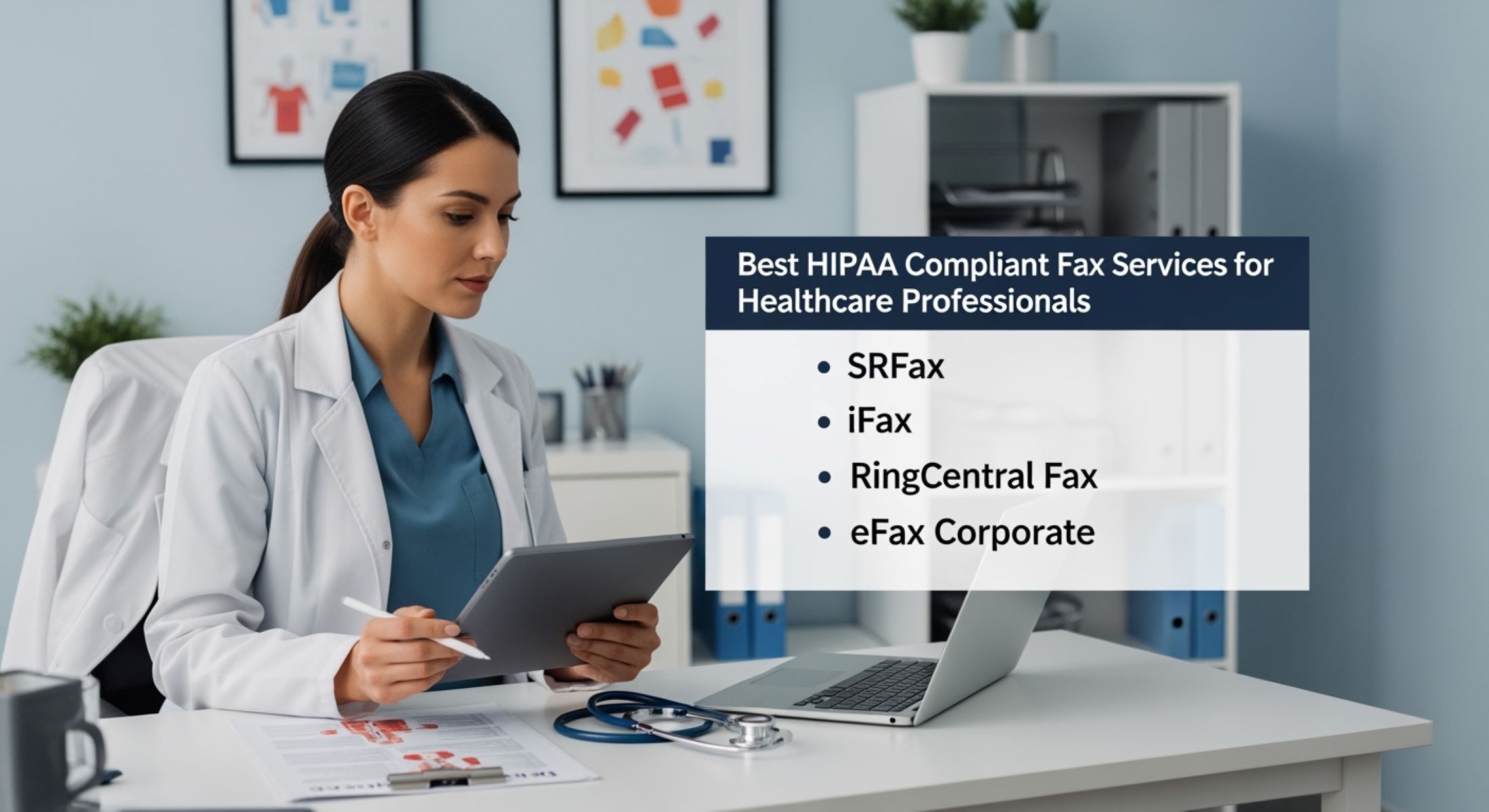
Best HIPAA compliant fax service for healthcare professionals
Let’s start with the basics. HIPAA stands for the Health Insurance Portability and Accountability Act, and if you’re in healthcare, you already know how serious it is about protecting patient information. But here’s the twist: even in 2025, best HIPAA compliant fax faxing is still alive and kicking. Why? Because it’s still one of the few methods that—when done right—can transmit sensitive patient data securely.
Understanding HIPAA Compliance in Digital Faxing
HIPAA compliance is far more than just ticking a box or meeting a minimum requirement. When it comes to digital faxing, it means that the entire process of sending and receiving sensitive health information must be secured and managed with strict safeguards. A fax service that claims to be HIPAA-compliant has to make sure that patient data is protected at every stage — from the moment it leaves your device until it reaches the recipient. This involves implementing strong encryption protocols both while the data is stored (at rest) and during transmission (in transit) to prevent unauthorized access or interception.
Beyond encryption, controlling who can access the faxed information is crucial. A compliant fax service should have robust access control mechanisms, which means only authorized personnel can send, receive, or view the documents. This reduces the risk of accidental data breaches or intentional misuse by insiders. Along with this, the service must maintain detailed audit logs that track every fax sent or received, showing who accessed the information and when. These logs are vital for accountability and for demonstrating compliance during audits or investigations.
Another critical element of HIPAA compliance is the Business Associate Agreement (BAA). This legal contract between the healthcare provider and the fax service provider outlines the responsibilities for protecting patient information. Without a signed BAA, a fax service cannot be considered truly compliant under HIPAA rules. The BAA ensures that the fax provider is legally obligated to safeguard protected health information (PHI) and to notify the healthcare entity in case of any breaches.
If a fax provider is unwilling or unable to provide a BAA, it’s a clear red flag. Healthcare professionals should avoid such services to prevent legal liabilities and risks to patient privacy. In summary, HIPAA compliance in digital faxing is a comprehensive commitment involving technical safeguards, strict access controls, transparent audit trails, and legal agreements that together protect sensitive health data at all times.
The Role of Fax in Modern Healthcare Workflows
Faxing might feel like a throwback in our digital age, but it continues to play a vital role in healthcare communication. Here’s a detailed look at how faxing supports everyday operations across the medical field:
- Laboratories sending test results: Labs often send detailed patient diagnostics, blood work, imaging reports, and other test results via fax to doctors and clinics to ensure timely and secure delivery of sensitive health data.
- Clinics and doctors referring patients: When a clinic refers a patient to a specialist or another healthcare provider, referral forms, medical histories, and prior treatment notes are faxed to streamline the process and maintain patient care continuity.
- Pharmacies processing prescriptions: Pharmacies frequently receive prescriptions through fax, especially from providers or patients who do not use electronic prescribing systems. This helps fill medications quickly and securely.
- Hospitals coordinating with specialists: Hospitals send and receive medical records, consultation requests, and care coordination documents via fax to ensure seamless communication between departments and external specialists.
- Insurance companies handling claims: Medical billing and insurance claims documentation are commonly faxed between providers and insurance carriers for verification, processing, and approvals.
- Patient intake and registration: Patient demographic information, consent forms, and insurance authorizations are often transmitted through fax to streamline admissions and appointments.
Key Features of a HIPAA-Compliant Fax Service
| Feature | Description | Why It Matters | Common Implementation | Healthcare Benefit |
| End-to-End Encryption | Data is encrypted both when stored and during transmission to prevent unauthorized access. | Protects sensitive patient information from being intercepted or accessed by unauthorized parties. | TLS (Transport Layer Security), AES-256 encryption | Ensures PHI remains confidential throughout the faxing process. |
| Business Associate Agreement (BAA) Availability | Legal contract between the healthcare provider and fax service outlining data protection duties. | Required by HIPAA to establish accountability and compliance responsibilities of the fax provider. | Signed agreements prior to service use | Provides legal assurance and reduces liability risks. |
| Secure Cloud Storage | Faxed documents are stored securely in the cloud with strong access restrictions and backups. | Prevents data loss and unauthorized physical access while ensuring documents are available when needed. | Encrypted servers, redundant backups | Easy retrieval and disaster recovery without compromising security. |
| Access Controls (2FA, Password Policies) | Measures to restrict system access only to authorized users through passwords and multifactor authentication. | Limits exposure of PHI to trusted individuals, reducing insider threats and accidental leaks. | Two-factor authentication, role-based access | Enhances security by preventing unauthorized use of fax accounts. |
| Fax Number Masking | Allows the sending fax number to be hidden or replaced with a generic number to protect privacy. | Prevents disclosure of sensitive contact details and reduces phishing or spoofing risks. | Configurable number masking in settings | Adds a layer of privacy and protects healthcare organization identity. |
| Audit Logging | Detailed logs track every fax sent or received, including timestamps and user activity. | Essential for compliance audits, breach investigations, and ensuring transparency of data handling. | Automatic logging with exportable reports | Enables accountability and helps demonstrate HIPAA compliance. |
| Mobile and Desktop Access | Access fax services via smartphones, tablets, and computers, allowing flexible and remote use. | Facilitates healthcare workflows outside traditional office settings while maintaining security standards. | Dedicated apps and web portals with secure login | Increases convenience and speeds up communication in care delivery. |
| EHR Integration | Ability to connect and exchange fax data directly with Electronic Health Record systems. | Reduces manual data entry, errors, and speeds up patient information sharing between systems. | APIs and plugins for popular EHR platforms | Streamlines clinical workflows and improves patient care accuracy. |
Top-Rated HIPAA-Compliant Fax Services (2025 Edition)
In 2025, healthcare professionals looking for HIPAA-compliant fax solutions have several trusted options to choose from, each with its own strengths and unique offerings. Services like SRFax and iFax are popular among small to medium-sized practices due to their user-friendly interfaces and affordable pricing plans. These providers emphasize secure, encrypted fax transmission and offer features like Business Associate Agreements (BAAs) to ensure full HIPAA compliance. Their flexibility and ease of use make them excellent choices for clinics that need reliable faxing without complex setups.
For larger healthcare organizations or enterprises requiring extensive integrations and scalability, providers like RingCentral Fax and eFax Corporate stand out. These services support advanced features such as integration with Electronic Health Record (EHR) systems, high-volume faxing capabilities, and detailed audit trails. They also provide robust security protocols designed to handle the demands of hospitals, specialty clinics, and multi-location practices. Their customizable solutions and dedicated customer support cater to organizations that require comprehensive compliance management and seamless workflow integration.
Other notable providers include Biscom and Fax.Plus, which cater to a broad range of healthcare settings by combining secure cloud storage with mobile and desktop access. Biscom, in particular, is known for its enterprise-grade security and reliable service, while Fax.Plus offers affordability and ease of use with options suited for both individuals and teams. Updox Fax and Concord Fax also deserve mention for their strong focus on integrating fax communications with clinical workflows and patient management systems, helping healthcare providers streamline information exchange while maintaining compliance.
Ultimately, choosing the best HIPAA-compliant fax service depends on your clinic’s size, budget, and technical environment. Smaller practices might prioritize cost-effective, simple-to-use services, while larger institutions often need more sophisticated features like EHR integration and volume flexibility. Evaluating your specific needs and testing trial versions can help ensure you pick a fax service that protects patient data, improves communication, and fits seamlessly into your healthcare workflow.
Comparative Overview of Top HIPAA-Compliant Fax Services
When evaluating HIPAA-compliant fax services, it’s essential to look at several critical factors such as legal compliance through a Business Associate Agreement (BAA), how well the service integrates with Electronic Health Record (EHR) systems, availability of mobile apps for flexible access, pricing plans, and whether a free trial is offered. Below is a detailed, in-depth list covering these aspects for the leading fax providers in healthcare:
- SRFax
Offers a signed Business Associate Agreement ensuring full HIPAA compliance. It provides comprehensive integration with EHR systems, allowing healthcare providers to streamline communication and workflow efficiently. SRFax supports mobile applications, which means users can send and receive faxes conveniently from smartphones or tablets. The service starts at an affordable monthly rate of $7.95, making it a cost-effective choice especially for small to medium-sized practices. Additionally, SRFax provides a free trial, giving potential users a risk-free way to test its features and reliability before committing. - iFax
Comes with a BAA to guarantee compliance with HIPAA regulations. This service supports full integration with EHR systems, which helps reduce manual paperwork and improve accuracy in patient record handling. It also offers mobile app access for enhanced flexibility, allowing healthcare professionals to fax securely on the go. Pricing begins at approximately $16.67 per month, positioning it as a mid-range option with solid functionality. iFax includes a free trial period so healthcare providers can assess whether it meets their operational needs. - RingCentral Fax
Provides a signed BAA for HIPAA compliance and features a strong mobile app presence, making it easy for users to fax from various devices. Its EHR integration, however, is limited compared to other providers, which might be a consideration for healthcare organizations that require deep system interoperability. Pricing starts at $19.99 monthly, which is higher than some competitors but may be justified by RingCentral’s broader communication platform offerings. The company also offers a free trial to allow prospective users to explore its services before purchase. - eFax Corporate
Tailored primarily for enterprise-level healthcare organizations, eFax Corporate includes a BAA and supports full EHR integration. It also offers mobile app access, enabling staff to manage faxes securely anytime, anywhere. Pricing for eFax Corporate is customized based on the organization’s size and fax volume, reflecting its ability to scale for large institutions. A free trial is available to evaluate the system’s capabilities and fit within complex healthcare environments.
Why Email Isn’t Enough for Protected Health Info
| Issue with Email | Description | Risk to PHI | How Secure Fax Addresses It | Benefit to Healthcare Providers |
| Lack of End-to-End Encryption | Many email services do not encrypt messages both in transit and at rest by default. | PHI can be intercepted, accessed, or altered by unauthorized parties during transmission. | Fax services use strong encryption protocols (TLS, AES-256). | Ensures confidentiality and data integrity during communication. |
| Weak or No Access Controls | Emails can be forwarded, copied, or accessed by unintended recipients without restrictions. | Increases risk of accidental disclosure or unauthorized viewing of PHI. | Fax systems enforce strict access controls and authentication. | Limits data access to authorized users only, reducing internal breaches. |
| No Reliable Audit Trails | Standard email does not provide detailed logs showing who accessed or received messages. | Makes it difficult to prove compliance or investigate potential breaches. | Fax services maintain detailed, time-stamped audit logs. | Enables accountability and supports HIPAA compliance audits. |
| High Risk of Human Error | Emails can be mistakenly sent to wrong recipients or misspelled addresses. | Patient privacy can be compromised through simple user mistakes. | Fax systems often include confirmation receipts and validation. | Reduces errors by providing delivery confirmations and verification steps. |
| Limited Legal Protection | Without proper safeguards and agreements, emailing PHI can violate HIPAA regulations. | Healthcare providers risk penalties, fines, and legal consequences. | Fax providers sign Business Associate Agreements (BAA). | Offers legal assurance and reduces liability for data breaches. |
| Difficulty in Managing PHI Storage | Emails often remain stored on multiple devices and servers without proper security controls. | Increases vulnerability to unauthorized access and data loss. | Fax systems use secure cloud storage with encryption. | Ensures safe, centralized, and compliant storage of sensitive documents. |
How Digital Faxing Reduces Administrative Headaches
If your healthcare office is still relying on paper faxes and filing cabinets, you’re dealing with a system that’s not only outdated but also inefficient—kind of like trying to play Spotify on a cassette player. Paper-based faxing requires physical machines, manual sorting, and storing bulky documents, which inevitably leads to lost paperwork, delayed communication, and frustrated staff. The administrative burden becomes even heavier as the volume of faxes grows, eating into valuable time that could be better spent on patient care.
Digital faxing changes the game by streamlining these cumbersome processes. One major advantage is fax-to-email delivery, which sends incoming faxes directly to your email inbox. This eliminates the need to print every fax physically and allows staff to access documents quickly from their computers or mobile devices. It also makes organizing and responding to faxes faster and more convenient, cutting down on bottlenecks at the front desk and reducing turnaround times.
Another powerful feature of digital fax services is secure cloud storage with robust search capabilities. Instead of sifting through piles of paper or endless file cabinets, staff can instantly locate any faxed document using keywords or dates. This boosts efficiency and ensures that critical patient information is never misplaced. In addition, batch faxing enables sending multiple documents at once, which is a huge time saver when dealing with referrals, lab reports, or insurance paperwork.
Automated routing further reduces administrative headaches by directing incoming faxes to the correct departments or team members without manual intervention. This means referrals go straight to specialists, billing documents reach the finance team promptly, and prescriptions are immediately available to the pharmacy staff. Altogether, these digital tools help healthcare offices minimize errors, save time, improve communication, and ultimately provide better patient service. Your front desk and administrative staff will definitely thank you for making the switch.